
DIFC digital marketing, with the website, SEO, social and ads run by the same people
Website, search, social and paid ads for the banks, law firms, clinics and restaurants between Financial Centre Metro Station and Gate Village, run by one team and planned from the searches your clients make.
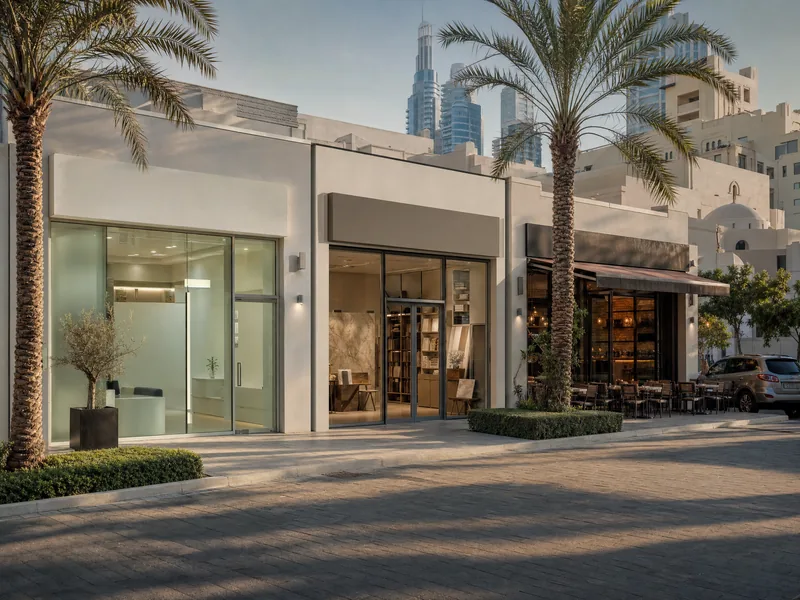
DIFC is a financial free zone with its own courts, its own regulator and its own registrar, and the businesses inside it range further than the name suggests. International banks, financial firms and legal consultancies fill the Gate District. Galleries, restaurants and a jeweller occupy the terraces of Gate Village, in buildings numbered 5, 6 and 8. Salons, clinics, fitness studios and over 100 dining and retail concepts run along Gate Avenue, and the apartment towers of the Zabeel District keep people in the area after the offices close. A law firm here sells to a general counsel 2 towers over who will read the website before she replies to an email. A clinic sells to the people who come off the Metro at 8 and need an appointment at 1. Both are working with a website that says Dubai in the title and names no district at all, which is no use to anyone typing DIFC into a phone. We start by finding out what those clients type, with the district attached. The site is then built in Webflow around those searches, one page per service for each district that earns it, and the people who wrote the pages also run the rankings, the LinkedIn posts and the Google campaigns, which is the only arrangement under which the 4 stop contradicting each other.
What businesses here need
The research describes 5 kinds of business in DIFC: the banks, financial firms and legal consultancies of the Gate District; financial services firms regulated by the DFSA; the innovation and technology community; the art galleries and auction houses; and the restaurants, retail, wellness and lifestyle concepts. The people they sell to work on the office floors, live on the residential floors (Index Tower has homes from floor 31 up), or come in for a gallery or a lunch and park at Gate Avenue for the free first hour.
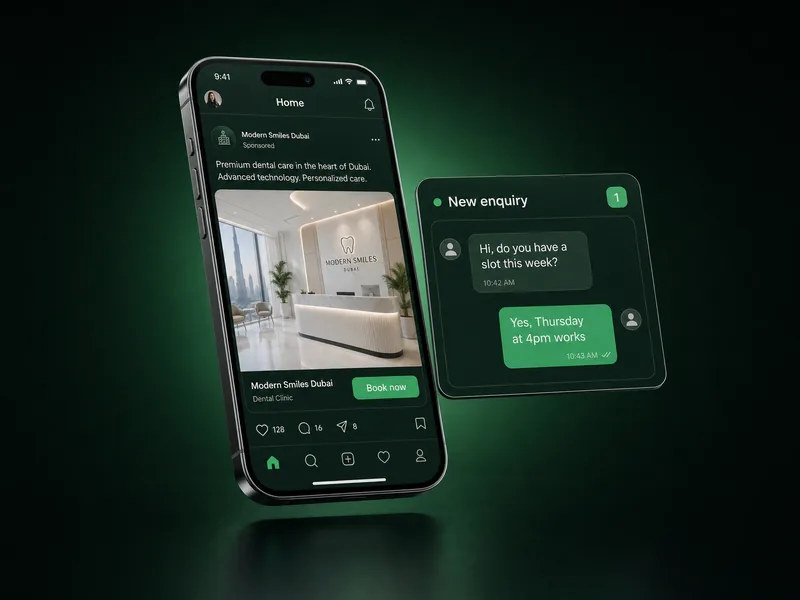
Each one buys differently. A financial firm or a legal consultancy is chosen slowly, by someone who searches with the district attached, reads the partner pages, checks the licence and only then sends a message, so its site needs named people, each service explained without jargon, and a district page wherever its clients sit. A restaurant in Gate Village is chosen in a minute by someone looking at photos on a phone, so it needs the map listing, the menu and the booking link to work with one thumb. A clinic or a salon on Gate Avenue needs the next appointment, which means the Google profile, the hours and the WhatsApp button matter more than the homepage ever will.
The failures are shared. The website lists the firm's services in one paragraph and names no district. The Google profile shows a photo of the Gate building instead of the office and an opening time that is wrong on Fridays. The LinkedIn page last posted a conference photo. The ad account targets the whole UAE and nobody has read its search terms since it was set up. When each of those has its own supplier, each gets its own invoice and its own excuse, and the firm spends its Thursday afternoons refereeing. Held by one team, they feed each other: the search numbers that decided which pages to write also choose the ad phrases, the profile the rankings need is the profile the posts appear on, and a post about a DIFC Courts ruling sends its readers to a page about the district they are standing in. The districts either side get the same treatment on digital marketing in Downtown Dubai and everything we do on Sheikh Zayed Road.
Our services here
Web design
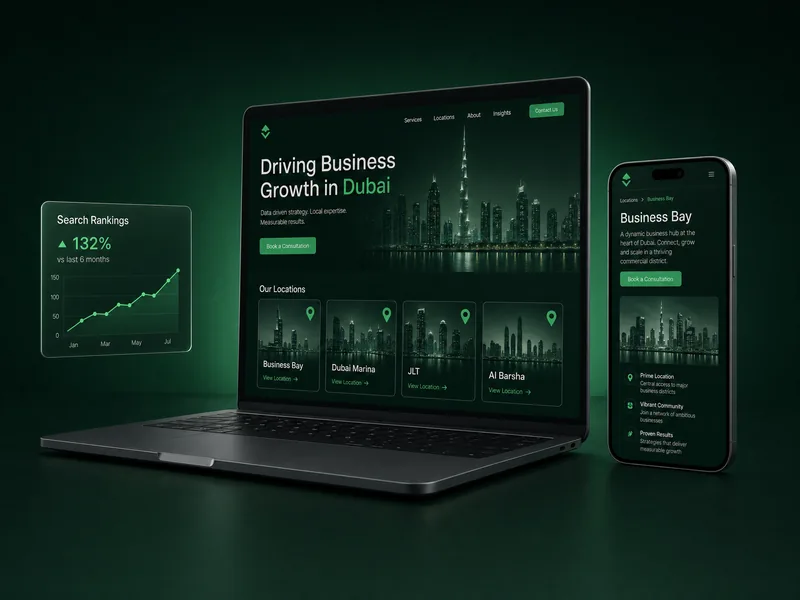
A Webflow site built so that a consultancy's visa page, licence page and formation page each exist for every district the research supports, hosted, fixed and ranked for one monthly figure from AED 1,500 a month + VAT, no build fee. Websites for DIFC businesses walks a consultancy through the 3 plans.
SEO
You see the DIFC search numbers before anything is written, and after launch each month's work goes on whichever district page sits closest to page 1, plus the profile that puts the firm in the map results. SEO in DIFC lists the phrases we would test first for a recruitment agency.
Social media
LinkedIn explainers for a general counsel, Instagram for the lunch crowd on Gate Avenue, profile posts for the map, each ending in a WhatsApp thread that names the district. Priced on a call, and social media in DIFC sets out what that first call covers.
Paid ads
Campaigns for DIFC, for Downtown Dubai and for the road between, each delivering its clicks to its own district's page, with WhatsApp taps counted from day 1 and the budget paid by the firm to Google and Meta directly. Google and Meta ads in DIFC shows how it is split.
Frequently asked questions
How does a DIFC business get in touch?
Over WhatsApp, with a line about what the firm sells and where its clients sit, or through the form on this site for anyone who prefers to write it out properly. There is no phone queue and no sales call before the research. The reply is a short table of what people type with DIFC and the nearby districts attached, how often, and whether a page could win each phrase; the 20 minute call comes after. Nothing is paid before you have seen the numbers, and a DIFC firm that only wants the website and the search work can start there.
Why use one team for every channel in DIFC?
Because the 4 channels are built from the same research, and they fail separately when nobody owns the whole. The research that settles which district pages get written settles, in the same sitting, which phrases the DIFC ad campaigns bid on. The Google Business Profile the rankings depend on is the profile the posts go out on. A LinkedIn post about the Registrar of Companies sends its readers to the DIFC page, which carries the WhatsApp button the ads are measured by. One team means one report, with rankings, posts and ad spend on the same sheet, and nobody blaming the other supplier.
Does AI search change marketing for DIFC businesses?
It changes what a page has to look like. Questions about DIFC firms, which free zone suits a consultancy, whether a dispute goes to the DIFC Courts, which clinic near the Metro takes walk ins, are increasingly answered above the results by an Overview or a voice assistant, from pages that state things plainly. So the first line of each page is the sentence an assistant could lift whole, the questions a general counsel or a patient would ask sit underneath as they would phrase them, and the site carries the structured data and llms.txt index the systems read. Every plan includes it.
Which DIFC businesses is this for?
The ones that sell to people who search by district: a law or accounting practice in the Gate District, a recruitment agency placing staff with the banks, a business setup consultancy at the Registrar of Companies every week, a clinic, salon or restaurant on Gate Avenue or in Gate Village. It is less suited to a DFSA regulated firm whose marketing is governed by rules we would need to read first, and we say so on the call. A Launch plan, 6 services by 10 districts, suits most owner led businesses in DIFC better than it suits a bank.
The clients of a DIFC firm sit in the Gate District and along Sheikh Zayed Road, and they type those places into Google along with what they need. Marketing that works here gives each of those searches a page, moves the page up over the months, shows posts to the people who would save them, and lands the ads on those same pages, one team holding all of it and the research done first. Every other district is listed on our areas page; the immediate neighbours are Business Bay, the Trade Centre area and Zabeel.
WhatsApp us what the firm sells and where its clients sit, and the search numbers for DIFC come back before any call is booked.
Find the plan that fits your business
Tell us what you sell and where you want work from. We look up how many people search for it each month in those districts, then send you the numbers and the plan that covers them.
What happens next
We reply on WhatsApp within the working day.
You get the search numbers for your services in your districts, and the plan that fits them.
Nothing to pay up front, whichever plan you choose.