Social media for Jebel Ali businesses, planned around the people who pass Jebel Ali Port every day
LinkedIn, Instagram and Google posts for the traders, forwarders and workshops between Jebel Ali Port and Al Maktoum International Airport, shot on the warehouse floor and the quay for the buyers who really scroll, with a price set after a look at the accounts.
Social media for Jebel Ali traders whose buyers scroll LinkedIn at a desk and WhatsApp from a warehouse
An electronics trader in the Jebel Ali Free Zone ships pallets of handsets, cables and screens to buyers who never visit the warehouse. Its Instagram account has a logo, 40 followers and a post from 2 years ago wishing everyone a happy new year. The buyers it wants are procurement managers in Dubai South and retail chains across the region, who read LinkedIn between meetings, and none of them has seen the trader's stock, its racking or the person who would answer their message. What makes a buyer pause is a 20 second clip of a container coming off a truck, a new line unboxed on the bench, a volume price for a model that has just dropped. That is the material Jebel Ali social media gets built from here. One call establishes who buys from you and where they read; every post after that comes out of the trade itself and ends in a WhatsApp thread with Jebel Ali already in its first line, and the same call fixes the price.
LinkedIn first for a Jebel Ali trader, Instagram second, TikTok not at all
An electronics trader in Jebel Ali sells to procurement managers, and procurement managers read LinkedIn, so that is the first platform: a post a week on what has landed, what a model costs in volume and who at the company answers the phone. Instagram comes second, for the product photography and the warehouse clips that buyers forward to a colleague. Google Business Profile posts come third, because a search for electronics wholesaler near Jebel Ali Free Zone shows a map box and a profile with fresh posts wins the tap. TikTok and Facebook are left alone, because nobody is buying 500 handsets from a dance. A cafe serving the industrial area would need the reverse order, so the platforms are chosen trade by trade on the first call.
Jebel Ali content that stops pretending the trade is glamorous
The generic version gives itself away: a skyline at dusk, a library picture of a container ship that never docked here, a caption about global reach, a hashtag for a city the firm has no presence in. It tells a buyer nothing about what is on the shelf this week. Content from Jebel Ali looks like Jebel Ali: the quay with its cranes in the background, pallets being wrapped, the rail terminal where boxes go onto trains, the office with the catalogue on the wall, a person counting stock. Making it takes longer, and it is the only kind a procurement manager recognises as real. The skyline stays out of your feed, and so does any ship borrowed from a photo library.
A city wide feed loses to a trader filming its own Jebel Ali shelves
An electronics trader in Jebel Ali running one feed for all of Dubai posts what every trader in the city posts: a logo, a greeting on each public holiday, a product shot from the supplier's catalogue. The procurement manager in Dubai South scrolls past, because nothing in it says what the trader stocks, at what volume, or whether anyone will answer. Content built for this district shows the shelves inside the Jebel Ali Free Zone, the model that landed on Tuesday, the clip of a pallet leaving for the airport, and the person who quotes. The WhatsApp link at the foot of each post already names Jebel Ali and the product, and the trader's district page sits behind it holding the detail a post cannot. The questions buyers ask on the phone become the posts.
The Jebel Ali post that buyers forwarded is the one to put money behind
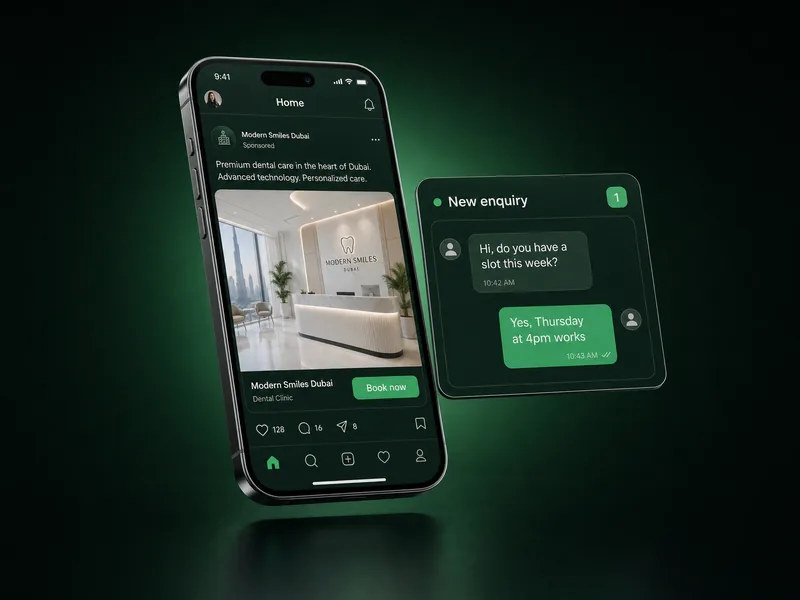
Most posts are tests. One in 10 does something different: a clip of a new line being unboxed gets forwarded, saved and answered with 5 WhatsApp messages from buyers the trader had never spoken to. That post has earned a budget. It becomes a LinkedIn or Meta ad aimed at procurement people around Jebel Ali and the districts the trader ships to, carrying the same WhatsApp link, and it is switched off the moment the cost of a conversation climbs. The ad money stays yours, paid from your own account to Meta or Google; what we charge for the work is a separate figure settled on the call. Google and Meta ads in Jebel Ali explains how the organic post and the paid one are run together.
Who is actually scrolling in Jebel Ali, and what a trader shows them
The research describes the audience here as mostly businesses: importers, exporters, manufacturers and logistics operators, plus the workforce of the industrial areas. Jebel Ali Port alone runs 80 weekly services to more than 150 ports, and the people buying from a trader inside the free zone are the ones deciding what goes into those containers. A procurement manager wants to see stock levels, lead times, a volume price and a face. The warehouse staff next door want lunch and a phone repair, which is a different business and a different feed. Which audience is yours gets decided on the first call, and the plan follows that answer, never whichever platform happens to be fashionable.
A Jebel Ali trader's feed should look like its warehouse, tidy and labelled
A buyer who visits a trader's warehouse inside the Jebel Ali Free Zone and finds racked stock, printed labels and a clean counter, then opens a feed of blurred phone photos and clip art, revises what they think of the firm. The brand tidy up comes with every plan: the site's typeface, colours and photography are carried across to the grid, so profile picture, post templates and product shots read as the work of the same firm that built the website. For a trader that means a plain typeface, 2 colours, products photographed on the same bench under the same light, and no library image of a handshake. Feed, site and Google profile then agree with each other, which is what Jebel Ali web design is built to make easy.
An electronics trader in Jebel Ali sells to buyers who have never seen its shelves, and a feed can show them or hide them. On the first call we establish who those buyers are and where they read, and nothing is priced until that is known.
Who buys from you in Jebel Ali and beyond, which platforms they read, and what they would forward to a colleague. The accounts you run, the clips already sitting on the warehouse phone, and the number that enquiries ought to land on. Who in the company will stand in front of a camera, and how often the stock changes.
- A trader or distributor inside the Jebel Ali Free Zone that wins orders on stock and lead time.
- A freight forwarder or courier near the port whose clients want to see the operation before they trust it with a container.
- A cafe, garage or clinic serving the industrial area that needs the workforce to find it on the map.
Frequently asked questions
Do we need a new shoot for our Jebel Ali social media?
Usually not at first. The clips that work for a Jebel Ali trader are the ones nobody else can get: the container arriving, the pallet being wrapped, the new line on the bench, the person who answers the phone. You get a short list of what to film, in 20 second pieces, and the editing, captioning and posting happens at our end. A shoot earns its cost when there is a catalogue to build or a warehouse worth showing properly, and that gets organised in Jebel Ali with a photographer briefed by us. Rough footage is fine if it is real.
Do the posts link to our Jebel Ali pages?
Wherever a platform permits a link, yes; where it refuses, the caption names the page. A LinkedIn post about a new handset line sends readers to the trader's Jebel Ali electronics page; a clip of a pallet leaving for the airport sends them to the logistics page; the profile link goes to the district page, never the homepage. Each page has the WhatsApp button that turns a reader into a conversation. How SEO works in Jebel Ali explains why a district page beats a homepage as the destination.
Where do the ideas for Jebel Ali posts come from?
From the trade, never from a calendar of awareness days. The questions buyers ask a Jebel Ali trader on the phone this week are next week's posts: the lead time on a model, whether a line ships in a 12 pack or a 24 pack, what a pallet to Dubai South costs, which brands are in stock. The district's own facts, the port, the rail terminal, the airport link, become the settings. The first call surfaces the 20 or so questions every buyer asks, and the posts answer them one at a time until the list runs dry and the next call refills it.
How will I know if social media is working for my Jebel Ali business?
By the count of conversations, reported monthly. The WhatsApp link beneath each post names the district and the product, so an enquiry born of a Jebel Ali post arrives labelled as one. The monthly note lists how many threads opened, which posts opened them and what came of them. For a trader the count is low and each conversation worth a lot: one procurement manager messaging after a stock clip outweighs any number of likes. If the threads stop coming, the note says so and the plan changes.
How does a Jebel Ali business start with social media management?
A 20 minute call, booked by WhatsApp or the form, is the whole of the start. Ahead of it we read the accounts you already run and see who follows them. During it we ask who buys from you, where they read, what they would forward, and who at the company can be filmed. Afterwards you receive the plan: platforms, kinds of post, approval routine, price. No rate card exists, because a Jebel Ali trader with 3 product lines and a forwarder with 40 trucks need different things. Send us your details for a first call and the plan arrives within the week.
Should a Jebel Ali business post on Google as well as Instagram?
Yes, and for many Jebel Ali businesses the Google profile matters more. A buyer searching for an electronics wholesaler near Jebel Ali Free Zone meets a map box with 3 firms, their photos, their reviews and their latest post, and the one updated this week takes the tap from the one showing a logo and silence. Posting to the profile sits inside the plan, with the hours and photos kept honest and each review answered. The profile is also where the search work happens, so the same people handle both and the hours never disagree.
An electronics trader in Jebel Ali posting a greeting on each public holiday to 40 followers is invisible to the procurement managers who would buy from it. Content drawn from the trade itself, the quay, the warehouse, the new line on the bench, aimed at the people who place orders and closed with a WhatsApp link, gets tallied in conversations every month; the price comes from one short call. The method is on social media across Dubai and the other 3 channels on digital marketing in Jebel Ali. Next door: our Dubai South social media page, Jebel Ali Village social media and social media for Dubai Investment Park businesses.
Send a clip from the warehouse and tell us who picks up the phone; the Jebel Ali call gets booked and the first post comes back named.